
Trusted Dryer Vent Cleaning in Virginia Beach
Most homeowners think about fire safety in terms of smoke detectors, electrical panels, and kitchen hazards. Very few think about their dryer vent. That is a serious oversight. A clogged or restricted dryer vent is one of the most common and most preventable causes of residential fires in the United States, and it is a hazard that builds silently inside your walls until it reaches a critical point. That’s where Victor’s Air Experts will come to rescue.
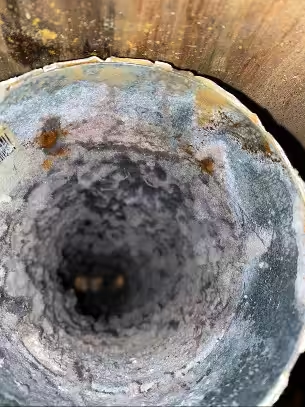
Understanding Different Dryer Vent Systems
Not all dryer vent systems are the same, and the type of vent installed in your home affects both the rate of lint accumulation and the dryer vent cleaning in Virginia Beach approach required.
Rigid Metal Duct Systems
Rigid aluminum or galvanized steel ductwork is the preferred material for dryer vent lines and offers the smoothest interior surface, which means lint has fewer points of adhesion and airflow remains more efficient over time. Rigid systems are the easiest to clean thoroughly and the least likely to develop kinking or collapse that restricts airflow.
Semi-Rigid Aluminum Duct
Semi-rigid aluminum duct is more flexible than rigid metal and is commonly used in tighter installation spaces. It maintains reasonable airflow efficiency but has a slightly corrugated interior surface that creates more points for lint accumulation than fully rigid duct. Professional cleaning of semi-rigid systems requires careful attention to those corrugated ridges where buildup concentrates.
Flexible Foil or Plastic Duct
Flexible foil and plastic dryer vent duct, while inexpensive and easy to install, is the most problematic material from both an airflow and fire safety standpoint. The corrugated interior surface traps lint aggressively. These materials also kink easily, creating hard restrictions in the airflow path. Many jurisdictions and building codes now discourage or prohibit plastic flexible duct for dryer venting specifically because of the fire hazard it creates. If your home uses this type of vent duct, we will identify it during our inspection and discuss your options.
Long Vent Runs and Rooftop Exhausts
Some Virginia Beach homes exhaust dryer vents through the roof rather than through a side wall. Rooftop vent configurations involve longer duct runs, more elevation changes, and exterior caps that can become obstructed by nesting birds or debris. These systems require specialized cleaning equipment capable of accessing and clearing the full length of the run from multiple access points.
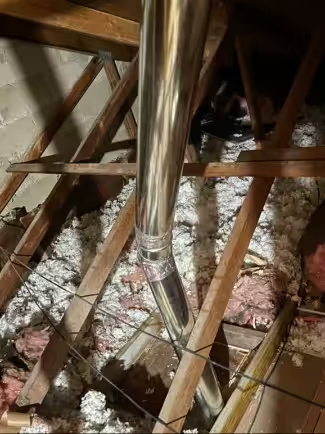
How Victor’s Air Experts Cleans Your Dryer Vent
Our dryer vent cleaning in Virginia Beach process is methodical, equipment driven, and designed to clear the full length of the vent line, not just the accessible section near the dryer.
Initial Inspection and Measurement
We begin by identifying your dryer’s exhaust connection point, tracing the vent line routing through your home, and locating the exterior termination point. We measure the length of the run, identify the number and angle of any bends, and assess the duct material. This information tells us which equipment configuration is appropriate and whether any sections of the vent line present specific concerns.
Disconnection and Access
We disconnect the dryer from the vent line to gain full access to the interior of the duct. This step also allows us to inspect the connection point for proper sealing, which is a common failure point where lint can escape into wall cavities rather than exhausting to the outside.
Rotary Brush Cleaning
Using flexible rotary brush systems sized to match your vent diameter, our technicians work through the entire length of the duct line. The rotating brush dislodges lint that has compacted against duct walls, including buildup at bends where accumulation is heaviest. Brush rods are extended progressively to reach the full run length, including sections routed through walls and ceiling spaces.
High Powered Vacuum Extraction
Simultaneously with brush agitation, we apply industrial vacuum extraction to pull dislodged lint out of the vent line. The vacuum is applied at the dryer end of the system, drawing all extracted material away from your living space and into a sealed collection unit. Nothing is left behind in your walls.
Reconnection and Airflow Verification
After dryer vent cleaning in Virginia Beach, we reconnect the dryer and run a cycle to verify that airflow through the cleaned vent line is strong and unobstructed. We measure or assess the exhaust at the exterior termination point to confirm that air is exhausting freely. This final verification step is what separates a thorough professional cleaning from a partial service.
Signs That You Are Overdue For Dryer Vent Cleaning in Virginia Beach
Many homeowners do not realize their dryer vent is dangerously clogged until a professional inspection reveals the extent of the buildup. These are the warning signs you should not ignore.
Your clothes are taking more than one cycle to dry completely. This is the most common early indicator of restricted airflow. When the vent cannot exhaust moisture efficiently, drying times increase noticeably.
The dryer feels unusually hot to the touch during or after a cycle. Restricted airflow causes the dryer to retain heat internally rather than exhausting it. An overheating dryer is a direct fire risk.
There is a burning smell during operation. Any burning odor from a dryer should be treated as an urgent warning. Lint ignition can begin inside the vent line before it becomes a visible fire.
The laundry room feels more humid than usual during drying cycles. When the vent cannot exhaust moisture properly, that moisture backs up into the room.
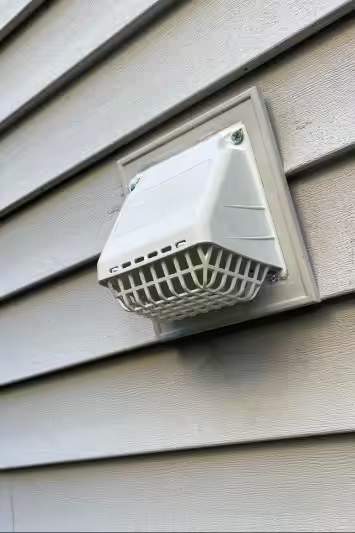
The exterior vent flap does not open fully or shows no airflow during operation. This indicates either a blockage in the line or a failed cap mechanism, both of which require immediate attention.
You have never had dryer vent cleaning in Virginia Beach and the home is more than two years old. Even without visible warning signs, buildup accumulates in every dryer vent over time.
The Fire Risk Is Real and Well Documented
The U.S. Fire Administration reports that clothes dryers are responsible for approximately 2,900 residential fires every year across the country. Those fires result in an estimated 5 deaths, 100 injuries, and $35 million in property damage annually. The leading cause in the vast majority of those incidents is one thing: failure to have dryer vent cleaning in Virginia Beach.
Here is the mechanism behind that risk. Every time your dryer runs, it expels hot, moisture-laden air through the vent line to the exterior of your home. That air carries lint, which is highly combustible fine fiber released from your laundry during the drying cycle. Over time, lint accumulates on the interior walls of the vent line, especially at bends and transitions in the duct run. As that buildup thickens, airflow becomes restricted. A restricted vent causes the dryer to overheat. An overheated dryer ignites accumulated lint. That ignition point is all it takes. Call for dryer vent cleaning in Virginia Beach before it’s too late
The risk compounds in longer vent runs, in vent systems with multiple bends, and in homes where the dryer is used frequently. Virginia Beach homes with laundry rooms located in interior spaces, far from an exterior wall, often have longer vent runs with more transition points, which increases lint accumulation rates considerably.
How Often Should You Schedule Dryer Vent Cleaning in Virginia Beach?
The National Fire Protection Association recommends have dryer vent cleaning in Virginia Beach at least once per year. Households that run the dryer daily or near daily, families with young children generating high laundry volumes, and homes with longer vent runs or rooftop exhaust configurations may benefit from cleaning every six months.
In Virginia Beach, the humidity factor also plays a role. Moist air cycling through a vent line during the humid summer months creates conditions where lint can absorb moisture and compact more densely than it would in a dry climate, increasing blockage rates over time.